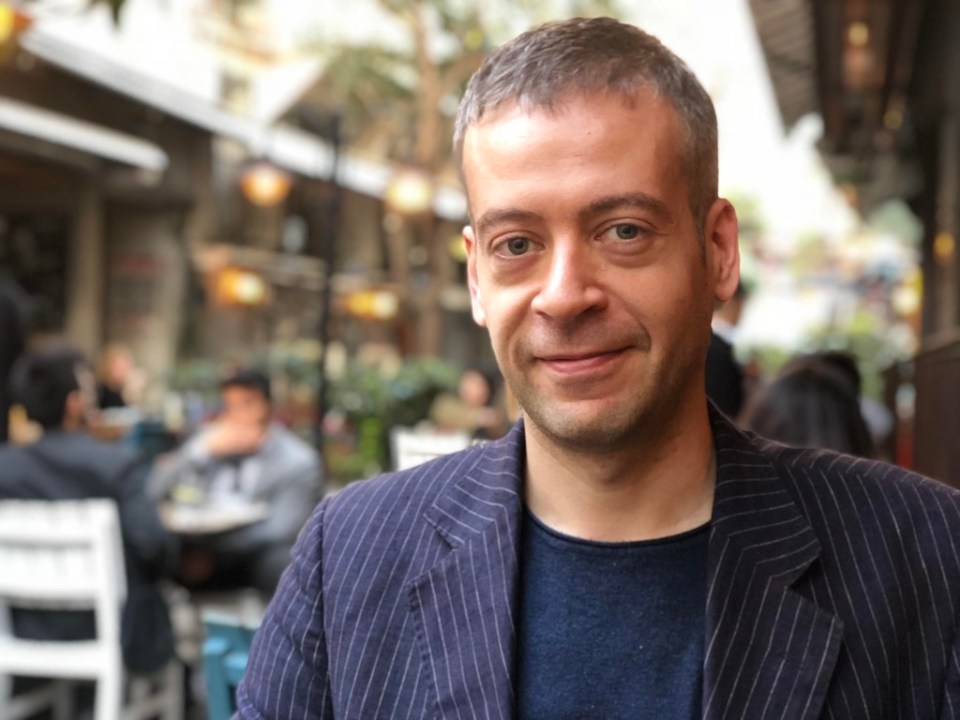
Kaya Genç, a European Press Prize finalist whose tech reporting for Rest of World has received a grant from Ford Foundation, is the author of five books: Şehir (Sia, 2025), The Lion and the Nightingale (Bloomsbury Academic, 2019), Under the Shadow (I.B. Tauris, 2016), An Istanbul Anthology (American University in Cairo Press, 2015) and Macera (YKY, 2008). The Economist called Under the Shadow a ‘refreshingly balanced’ book whose author, ‘a cartographer of the battlefield,’ ‘has announced himself as a voice to be listened to’; Publishers Weekly said it ‘represents both investigative and literary journalism at their finest’. The Los Angeles Review of Books described An Istanbul Anthology as ‘a compellingly real picture of the city’. The Times Literary Supplement praised the way The Lion and the Nightingale ‘grounds Turkish current affairs in the context of the past couple of decades and explains the attraction of extreme politics to the country’s youth’, while Foreign Policy said the book ‘expertly weaves the details of individual lives into a historical tapestry, and each person’s experiences illuminate larger changes in Turkish society happening that year,’ before picking it as one of the 6 Books to Understand Turkey. Kaya has contributed to the world’s leading journals and newspapers, including two front page stories in The New York Times, cover stories in The New York Review of Books, The Nation, Foreign Affairs, The Believer, and The Times Literary Supplement, and essays and articles in The New Yorker, The Paris Review, Foreign Policy, The Sunday Times, The Guardian, The Financial Times, The New Statesman, The Lancet, The Jewish Quarterly, The New Republic, Time, Newsweek, Apollo, Sight and Sound, Aperture, and The London Review of Books. The Atlantic picked Kaya’s writings for the magazine’s ‘best works of journalism in 2014’ list. The Los Angeles Review of Books chose his portrait of Annie Ernaux as one of its nine favorite essays from 2022. Also in 2022, his investigation about the environmental collapse in the Bosphorus was shortlisted for The European Press Prize (the European Pulitzer). Aperture magazine has picked his portrait of Sabiha Çimen as “one of the best photography features of 2022.” The Markaz Review picked his story of the Kurdish Ulysses as one of the best essays of 2023. A critic for Artforum and Art in America, he has been a contributing editor at Index on Censorship since 2013 and at The Dial since 2024. Kaya is the Istanbul correspondent of Los Angeles Review of Books. He gave lectures and talks at venues including SOAS, the London Review Bookshop and the Royal Anthropological Institute, and appeared live on flagship programmes including the Leonard Lopate Show on WNYC, BBC’s Start the Week and Democracy Now! aired on PBS and NPR. Since 2022, he has authored numerous essays for BBC World Service’s Weekend programme. Kaya has been a speaker at the Oxford Union, and Edinburgh, Jaipur, Lahore, Turin, Ferrara, IJF Perugia, Words by the Water Cumbria and Ways With Words Dartington Hall book festivals. A recipient of three fellowships from the Santa Maddalena Foundation, he earned his MA degree in English Literature from Universiteit van Amsterdam, and holds a Ph.D. in English Literature from Turkey’s first English Literature department at Istanbul University, founded by Eric Auerbach and Halide Edib upon Atatürk’s request in the 1930s. Kaya has worked as a fact-checker for The New Yorker, and was among the film critics who cast a ballot for Sight and Sound magazine’s Greatest Films of All Time poll in 2022. His work has been taught at various collages worldwide, including the University of Cambridge. According to The Village Voice few books of analysis published about contemporary Turkey come close to Kaya’s work ‘for sheer humanism and breadth of perspective’; Journal of Contemporary European Studies called him ‘a juggler of paradoxes, an assailer of conventional wisdoms and a challenger of foolish optimism’; and The Millions wrote: ‘Genç is arguably the most important Turkish writer writing in English still living in Turkey.’
 Kaya Genç